Frequently Asked Questions...
- Bringing in a dog or cat
- Our history
- About the Home
- Visiting the Home
- Lost or found dogs and cats
- Using Battersea's materials or logo
- Our work
- Pet ownership
- Rehoming a Battersea dog or cat
- Our dogs
- About our dogs
- About our work
- About the Home
- Working at the Home
- Supporting the Home
Bringing in a dog or cat
-
Bringing a dog or cat to the Home
-
We accept stray dogs and cats at any time, day or night. If you need to bring your dog or cat into Battersea Dogs & Cats Home in London, please contact us:
Dog intake
Tel: 020 7627 9218
Email: [email protected] .Cat intake
Tel: 0207 627 9308
Email: [email protected]If you need to bring your dog into our Brands Hatch or Old Windsor site consult the individual site's pages for details of opening times.
-
I brought my dog/cat into Battersea and would like to know how it's getting on?
-
Please email our Intake & Assessing department at [email protected], providing the reference number you were issued with when you gifted your dog or cat. A letter or email will then be sent to you.
-
Can I leave my dog/cat with you while I’m on holiday/moving house/in hospital, etc?
-
Battersea Dogs & Cats Home is a rescue and rehoming centre for dogs and cats which have been abandoned. In 2012 we cared for 8,640 dogs and cats, including all aspects of their welfare and wellbeing.
We do not offer a boarding service as we don't have the facilities to accommodate the animals. Details of boarding kennels/pet sitters can be found in the Responsible ownership section.
Our history
-
When was Battersea Dogs & Cats Home set up?
-
Battersea Dogs & Cats Home was established in 1860 by Mrs Mary Tealby, who was concerned by the number of animals roaming the streets of London.
The Home was then known as ‘The Temporary Home for Lost and Starving Dogs’ and was based in Holloway, North London. It moved to its present site in Battersea in 1871 and we have been here ever since.
-
When did Battersea Dogs & Cats Home start to take in cats?
-
Battersea started to take in cats in 1883. However for years many people were still unaware the Home rescues, reunites and rehomes thousands of cats every year. So in July 2005 we changed our name to Battersea Dogs & Cats Home.
About the Home
-
Where are your other centres?
-
We have three sites in total. The largest and most famous is located in Battersea, London. The two other centres are at Old Windsor, Berkshire, and Brands Hatch, Kent.
-
How many kennels do you have?
-
We have 258 kennels at the Battersea site, 171 at Old Windsor and 51 at Brands Hatch.
We have 70 cat pens at Battersea, 42 at Old Windsor and 22 at Brands Hatch.
-
How many dogs and cats do you have at Battersea?
-
At any one time we have around 400 dogs and 190 cats across our three sites. We also maintain a waiting list for people who want to bring us their dogs and cats as our kennels and cattery are usually full.
-
How many animals do you care for each year?
-
In 2012 we cared for 8,640 animals across our three sites, including 5,880 dogs and 2,760 cats.
Visiting the Home
-
Can I visit any of the Home's centres just to look around, not to rehome a dog or cat?
-
Battersea Dogs & Cats Home is open to the public for rehoming from 10.30am - 4pm every day of the week at the London centre, and from 10.30am - 5pm every day of the week at Brands Hatch and Old Windsor. During those times you will be able to visit our public kennels and cattery.
Lost or found dogs and cats
-
I have lost my dog / cat, how can I find out if it is at the Home?
-
Take a look at our lost dogs and cats section for more information.
-
I have found a stray dog / cat – what do I do?
-
Take a look at our found a dogs or cats section for more information.
Using Battersea's materials or logo
-
Can I use your website and logo for my school project?
-
We hope you find the website useful, should you need to use our logo then please follow these guidelines:
You can use our logo as long as you don’t reproduce it less than 25mm and it can only be used for your projects.
Our work
-
Where do you collect dogs from and how do they come into the Home?
-
Dogs are brought into the Home by local authority animal wardens, employed to collect stray animals.
This system was implemented a few years ago, before then people were encouraged to take stray animals to their local police station.
If you have found a lost or stray dog you will need to contact your local animal warden. Contact details can be found by calling your local council, or going on your local council’s website.
Owners also give their animals to us when they are unable, or unwilling, to care for them any more. In some cases a new baby has arrived on the scene and the parents are no longer able to keep their animal; or owners move home and can no longer accommodate their pet.
Sometimes owners take in a new pet into a household which already has a dog or cat and the animals don’t get on. There are many reasons why people give their animals to us.
-
How long will you keep a stray dog or cat for before you are able to rehome it?
-
We keep a stray dog or cat for seven days before we start the rehoming process. There is no time limit on how long animals can stay with us. We will care for the animals until they find a new home.
On average, dogs stay with us for 35 days before they find a new home, and cats stay for 27 days before finding a new owner.
-
What is the procedure for checking a dog or cat over when they come into Battersea Dogs & Cats Home?
-
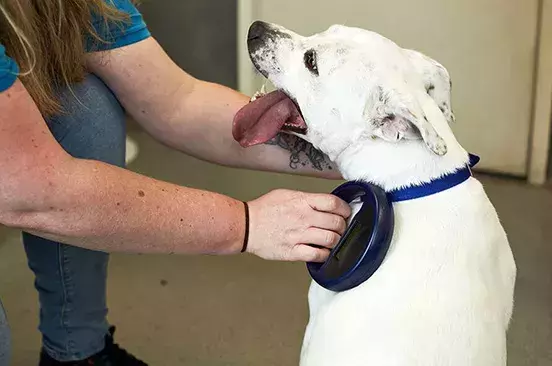
Any dog or and cat coming into the Home is first checked by one off our Veterinary Team. All animals are given a thorough health check on arrival and scanned for a microchip. Then the animal is seen by our Rehoming and Welfare team, who give them a kennel or cat pen, with a cosy bed, food and water. The Rehoming and Welfare team will care for the animal during its time with us.
Each dog and cat is given a name and a number and logged on our computer system.
All animals are given a chance to settle and then every dog and cat has an on-going assessment to determine its temperament. It is through this procedure that we find out about the animals’ personalities and build up a picture of what type of home would suit them best.
The dogs and cats are assessed using a variety of methods to provide an insight into each individual. The aim is to interact with the animal as an owner would so they are handled, cuddled and groomed as part of the assessment.
No dog or cat would ever be rehomed by Battersea Dogs & Cats Home without a complete assessment.
-
How long will a dog or cat have to wait before it sees a vet when it comes into the Home?
-
All dogs and cats are seen immediately on arrival by a member of the Veterinary team.
-
What happens if you take in a particularly aggressive dog?
-
Battersea Dogs & Cats Home accepts any breed of animal, of any age, including cats and dogs with serious medical conditions and behavioural problems. Every cat and dog that comes into the Home is treated on an individual basis and is assessed by a member of our veterinary team and our highly experienced and trained behavioural assessors. If, after assessment, the animal is found to have untreatable medical problems, or to have behavioural issues that mean we are unable to responsibly rehome it, we may have to take the difficult decision to put the animal to sleep.
The Home’s rigorous medical and behavioural assessment procedures mean that only animals that can be rehomed safely and responsibly are offered to the public.
-
Does Battersea Dogs & Cat Home put dogs and cats to sleep?
-
In certain cases, we do have to make the unfortunate decision to put a dog or cat to sleep but for medical or behavioural reasons only, not because it is taking too long to find the animal a home.
Because Battersea is not selective about the dogs we take in – we take in all strays and unwanted pets - we often take in animals with deep rooted behavioural issues and serious medical problems.
As an animal rehoming organisation it would not be responsible for us to rehome a dog or cat with serious aggression or medical issues. In these very sad cases, we must make the decision to put the dog or cat to sleep.
-
Why does Battersea have a policy of putting animals to sleep when other shelters are able to avoid it?
-
Battersea Dogs & Cat Home is the only animal rescue that takes in all stray dogs and cats, no matter what their health or behaviour issues may be.
Many shelters have a selective intake policy which means that they don’t take dogs with behavioural or medical issues.
We will take all dogs that are in need of our help and unfortunately, this means that we sometimes have to make the sad decision to put animals to sleep.
However our experienced veterinary team and behaviour specialists work with the animals to address health issues and rehabilitate them where possible.
Battersea’s kennels and catteries usually operate at full capacity and whilst we never turn away a dog or cat in need of our help, we do sometimes have to run a waiting list system.
This means that if people wish to give their animal to us we may need to ask them to wait until we have sufficient space to accommodate the animal.
-
How many walks do the dogs get each day?
-
We are very fortunate at the Home to have a team of over 350 Dog Socialising and Kennel Support volunteers across our three sites who walk and socialise our dogs regularly. At our London site our dogs are often taken to nearby Battersea Park.
They also have socialising sessions with our volunteers, where the volunteer spends time in the kennel with the animal.
-
How do you interact with the cats?
-
We have many volunteers who come to work with us as Cat Socialisers, spending time with our cats in specialist socialising rooms and writing up notes on each cat’s behaviour.
This helps the cats to get the human interaction they need. It also helps us to continually assess their behaviour.
-
How many vets do you have and how much contact will they have with each animal?
-
On arrival at Battersea all animals are be examined by a veterinary surgeon. Battersea employs a Clinic team of 33 staff across its three sites, including six vets. Battersea is also an approved nurse training practice. The thousands of operations undertaken cover a wide range of procedures, and we aim to neuter all rehomed animals on site.
-
Do you have any of your animals in foster homes?
-
Yes we do. For more information, see our Fostering section.
-
Who looks after the dogs and cats whilst they are staying at the Home?
-
We have a team of Rehoming and Welfare Assistants (RWA's) across our three sites whose job is to look after the dogs and cats on a daily basis.
The RWAs clean and maintain the kennels, feed and socialise the dogs and cats and monitor their wellbeing in the kennels and cattery.
-
Do you microchip the animals you rehome?
-
Microchipping is the only permanent way of identifying your dog or cat and it ensures that if your pet is lost it can be reunited with you as quickly as possible.
We microchip all dogs and cats we rehome. The cost of rehoming a dog and cat includes the cost of microchipping.
Last year, Battersea Dogs & Cats Home took in over 3,500 stray dogs and cats, and only 33% of all dogs and 10% of cats arrived with a microchip. We are committed to raising awareness about the importance of microchipping.
To this end, the Home offers free dog microchipping for pet owners who wish to have their pets microchipped.
This is the first time that this service has been made available to people who have not rehomed dogs or cats from Battersea in an effort to encourage responsible pet ownership in London.
Pet ownership
-
How can I get a microchip for my pet?
-
For more information see our microchipping section.
-
My dog / cat has symptoms of being unwell – can you advise me or can I bring it to the Home to see a vet?
-
See our Health and veterinary section for more information.
-
Can I bring my dog or cat to Battersea to be neutered?
-
While Battersea Dogs & Cats Home does not have the facilities to offer veterinary services like neutering, there are organisations that do. If you are on benefits then the Blue Cross, RSPCA or PDSA may be able to help.
-
Who do I contact to update my pet’s microchip details?
-
You should contact Petlog on 0844 4633 999 or www.petlog.org.uk. It will cost £7.50 to update your Petlog details, for continued peace of mind.
-
Could you provide me with details of pet sitters or boarding kennels?
-
We do have a few boarding kennels / pet sitters listed, however, we are unable to recommend any particular one.
We have not vetted the premises or services that each provides but we do take into account the views of customers and the local community in each case; the kennels / pet sitters listed below have had some good reports.
The kennels / pet sitters are:
Go Fetch
Tel: 0208 473 6564
Mobile:07958 000 876John & Gwen Laker
http://www.staffordwelfare.com/southease.php
Tel:01227 471647Barking Mad
http://www.barkingmad.uk.com/
Tel:0118 969 3115Cheeky Dogs
www.cheekydogs.vpweb.co.uk
Rehoming a Battersea dog or cat
-
How do I go about rehoming a dog / cat?
-
we have information on the cat rehoming process and dog rehoming process in the cat and dog sections.
-
Can I rehome a dog if I live in London?
-
Yes, we find many loving homes for our dogs in and around London. It is important for us to ensure that each dog is matched with the right owner.
Many of our dogs would prefer a rural environment but we also have dogs that would be happy in a London home.
Our experienced rehoming staff are there to ensure that all the dogs in our care are rehomed to owners who will meet their needs.
-
Can I rehome a dog if I have a full time job?
-
Dogs are very much companion animals and do tend to suffer if left alone for extended periods of time. As a general rule of thumb, an adult, mature dog over five years old should not be left for more than four to six hours on a regular basis.
A dog younger than this can generally be left a couple of hours but puppies shouldn’t really be left at all when they are very young, and the time they spend alone should be very gradually built up.
One of the most common reasons dogs are brought in to Battersea Dogs & Cats Home are due to separation problems. It is also one of the most common problems we are contacted about on the Behaviour Advice line.
As dogs can become very stressed or bored when left alone, they tend to bark, mess or become destructive and this can be a very complicated and time-consuming problem to work through, especially if you aren’t around to work through it.
As a rescue centre, we very rarely have a dog that will be able to be left for more than four hours and on the occasions when we do, we require a letter from a dog walker saying they will be coming in to walk the dog in the absence of the dog’s owners.
Everyone’s situation is treated individually, for example, if your day can be broken up or you can take the dog to work then an older dog may be a possibility for you. Our rehoming staff will be able to advise you further.
-
Can you have a full time job and also be a responsible cat owner?
-
You can have a full time job and be a responsible cat owner, but we would need to make sure that you were matched with the correct pet for your lifestyle.
Some of our cats can be left for up to 10 hours a day, as long as they have suitable access to outside space, water and a litter tray.
Other cats and kittens we care for need more consistent care, and therefore they would not be able to be left alone.
-
I would like to rehome a cat but I live in a flat and the cat will not be able to go outside.
-
As a rule we do not rehome cats to live entirely indoors and require potential homes to have outside access via a cat-flap/garden.
The exceptions to this rule apply only if a cat has FIV and cannot be allowed to interact with other cats, or in some cases with older cats that have been indoor cats before coming into us, when it may be felt that the transition to spending time outside would result in an unnecessary amount of stress for the animal.
-
How long does it take to rehome an animal?
-
It often takes more than one visit to the Home to find the animal most suitable for you. In most cases we will need to organise a home visit before you take your new pet home with you, so that we can ensure that your home meets the needs of the animal you are seeking to rehome.
To cut down the time it takes to rehome an animal, it is best if you can bring your whole family in to the Home to meet our Rehoming staff along with proof of address.
If you don’t own your own home, you will need to bring along proof that your landlord is happy for you to keep pets.
If you are rehoming a dog and have another dog/s at home you will need to bring your current dog/s into the Home so all the dogs can meet each other to ensure they get along.
-
Will Battersea Dogs & Cats Home need to come to my home before I am able to take an animal away with me?
-
Yes, it may be necessary for a member of staff to visit your home to make sure it is suitable for the dog or cat you are wishing to rehome. In some cases we also visit you after you have taken the animal home to make sure your new friend has settled in.
-
Will I have an interview?
-
Yes. It is vital that we interview everyone who is considering getting a pet from us. As a responsible animal welfare organisation, we need to make sure that each dog and cat we rehome will be living with the right people and in a suitable environment.
-
Can I choose my dog from your kennels or will you select the dog for me?
-
The Rehomers at Battersea Dogs & Cats Home will help you to decide which dog is best for you.
We cannot guarantee that you will be able to take home a dog that you like the look of when you walk around the kennels as it might not be suitable for your home and lifestyle.
Battersea’s ‘computer matching’ software will process your information and provide a list of the most suitable dogs or cats for you to look at.
-
Can I offer an animal a home if I have young children or a baby on the way?
-
In general, it is not a good idea to think about getting a dog when you are expecting a new baby.
This is because when a dog comes into a new environment, it needs time to settle in to his new home and get used to his new family.
It would not be fair to the dog to introduce a child too, therefore we strongly encourage parents with young children or a baby on the way to wait until the children are slightly older before getting a pet.
-
Why are so many of Battersea’s dogs not able to live with children?
-
Many of the animals we take in are strays, therefore we do not know the full history of the animal.
We do have dogs that can be rehomed with families with younger children, but we must be absolutely confident about the dog’s history and behaviour before that decision is made.
All behaviour assessments are undertaken by our experienced team of animal behaviourists.
-
How much does it cost to rehome a dog / cat from the Home?
-
Our rehoming fee is £135 for dogs (over 6 months) or £165 for puppies (under 6 months).
The fee is £75 for cats (over 6 months), £85 for kittens (under 6 months) or £130 for a pair of kittens.
Your new pet will have up-to-date vaccinations and a veterinary nurse will advise you on any other health care considerations.
In addition you receive four weeks free pet insurance and you are entitled to three months out-patient veterinary care for any condition relating to your pet’s stay in the Home.
Most dogs and cats are neutered, any animal that hasn’t been neutered is issued with a money-off voucher to help towards the cost at your local vet. Every animal is microchipped to help future identification.
Our dogs
-
What about dogs who are not suitable to be placed into pet homes?
-
For a number of years, Battersea has rehomed dogs to various services including the Army, RAF, HM Customs, Police, Prison and Security Services, and as working dogs into sheepdog, gundog, etc homes with an outstanding success rate.
We have a specialist Service Dogs team who work closely with these organisations to rehome dogs which may not be able to find a suitable family or domestic home.
About our dogs
-
What is the most popular breed of dog you see coming into Battersea Dogs & Cats Home?
-
We see large numbers of different breeds coming into the Home. In the 1990s the German Shepherd was the most common, but now the Staffordshire Bull Terrier is the most common breed we see coming into the Home.
-
Do you ever have pure-breed dogs coming in?
-
More information on the breeds that arrive into the home, see our Breeds section.
-
Why are there so many Staffordshire Bull Terriers at the Home?
-
One of the most popular of all the terriers, the Staffordshire Bull Terrier (91 kb)
has unfortunately become the victim of his own success and is being over bred in the UK, with supply far outstripping demand. Breed rescues and animal welfare charities are inundated with unwanted dogs.
Sadly we are seeing more Staffordshire Bull Terriers being purchased by youths as status dogs. Many young people get a dog as a status symbol, without the knowledge of how to handle and care for the animal.In addition many irresponsible owners are breeding Staffies and selling the puppies to anyone that has the money, without any checks to ensure that the dog is going to live in a suitable home and environment.
Staffordshire Bull Terriers tend to make very good pets but like any other breed of dog they need socialising and training from a young age to keep them well adjusted in society.They are a breed that is very eager to please and can make terrific pets and that’s also why so many other dog owners fall for them. You can find out more about the breed with our campaign, Staffies. They're Softer Than You Think
-
Are there guarding breeds at Battersea Dogs & Cats Home?
-
We do have guarding breeds at Battersea such as Rottweilers and German Shepherds but we will not rehome a pet dog for home guarding purposes. Some of our guarding breeds are rehomed to organisations like the police service and the armed forces.
About our work
-
What happens if the Home takes in an illegal breed like a Pit Bull Terrier?
-
There are four banned dog breeds under the Dangerous Dogs Act, which are the Pit Bull Terrier, the Japanese Tosa, the Dogo Argentino and the Fila Brasiliero.
If a banned breed of dog is identified, we are obliged by law to take whatever course of action the Police request of us.
About the Home
-
How many staff work at the Home?
-
We employ around 313 staff at any one time across our three sites.
Working at the Home
-
I would like to apply for a job at Battersea Dogs & Cats Home
-
You can view all of our current vacancies on our website.
Please note that if you are interested in working for the Home, you will need to apply for a specific vacancy advertised.
Unfortunately we do not accept CV's or covering letters as a method of applying for vacancies at the Home.
-
I would like to complete my work experience at the Home
-
Due to a high demand for work experience placements as well as staffing requirements, unfortunately we are only able to offer work experience placements to students who are attending either Merrist Wood or Nescot colleges studying an animal-related course.
Supporting the Home
-
Is Battersea Dogs & Cats Home a registered charity?
-
Yes, Battersea Dogs & Cats Home is a registered charity. Our Registered Charity Number is 206394.
-
Does the Home receive government funding?
-
We are heavily reliant on the generosity of our supporters through gifts in wills and donations.
We do receive some local government funding, but without the support of the kind people who give their money to help the Home each year, we would not be able to provide the same level of high quality care for the animals that we do today.
-
Does the Home accept gifts in kind (non-monetary donations)?
-
Yes. Please take a look at our Gifts in kind section for more information.