Pet Health Advice
Battersea Dogs & Cats Home sees a wide variety of veterinary cases, from the regular to the very unusual. Sometimes the result of treatment will be apparent after a matter of hours and in other cases it can take weeks. Some interesting cases are featured on this page
Case study: Gollum
Gollum came to Battersea in a terrible state, with scabs all over his skin and hardly any fur on his thin little frame. The vets identified his condition as Demodex Mange.
What is Demodex Mange?
- It's a mite that lives in the hair follicles
- Present at all times in small numbers it can multiply in times of stress causing dermatitis (inflammation of the skin).
- It is non-itchy and often results in hair loss.
- To identify Demodex a sample of skin layers is taken and viewed under a microscope.
- Once Demodex mange is confirmed it is treated with medicated baths.
Because Gollum was in such a poor condition he required many weeks of baths. After months of care and attention, however, he looked like a new dog.
When he arrived Gollum was terrified and sat huddled on his bed, but after being fostered by a member of staff he gradually came out of his shell and was rehomed.
What is feline cystitis?
Is your cat washing his bottom too much and being aggressive to other cats? He may have Feline Lower Urinary Tract Disease (FLUTD). Battersea vet Breeony Hunt explains all you need to know about the condition.
Contrary to popular belief, bacterial infections are a rare cause of cystitis (or Feline Lower Urinary Tract Disease) in cats. Cancers and bladder stones are more common. However, 65% of cases have no known cause.
Although the disease can affect any cat, it is more common in middle-aged, overweight, indoor cats fed on a dry diet. Stress plays a big role in cystitis, and stressful situations such as moving house, visitors and builders can all be triggers. The most common source of stress is another cat living in the same household.
Signs of Feline Lower Urinary Tract Disease include difficulty and pain on urination, increased frequency of urination, blood in the urine and aggression (towards the owner or other animals in the household). In severe cases the bladder can become completely blocked, but this is more common in male cats. A blocked cat may lose their appetite, and cry out when they urinate. They may also repeatedly strain, producing little or no urine, which an owner may mistake for constipation. This condition must be treated as a medical emergency.
Feline Lower Urinary Tract Disease usually subsides on its own in five to seven days, but several things can be done to alleviate your cat’s discomfort.
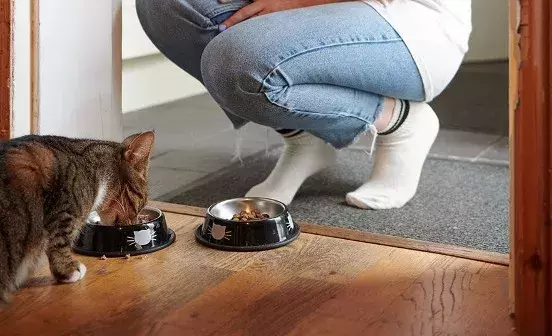
- Decreasing stress. If two cats are competing for attention in the same household it can be extremely stressful for them. Each cat should have its own water and food bowl, litter box and bed. A synthetic copy of the pheromone used by cats to mark their territory can be used in times of predicted stress.
- Increasing water intake. This is easily done by feeding tinned cat food. Cats prefer to drink from a wide-rimmed bowl made of ceramic, metal or glass, which should be kept as full as possible. Water fountains may also encourage your cat to drink.
- Medication. Nutritional supplements, painkillers and antidepressants can all be used; your vet will decide which treatment is best for your cat.
Up to 70% of cats with Feline Lower Urinary Tract Disease will get it again. By monitoring your cat closely, you may notice mild clinical signs before the onset of a full-blown episode, which can include increased grooming of the cat’s back end and aggression towards other cats. If you spot these signs you can help prevent the cystitis becoming too severe by increasing affection towards your cat, feeding wet food, and the use of pheromones. These measures should also be used if you anticipate your cat getting stressed, such as before a visit to the vet or a stay at the cattery.
Although Feline Lower Urinary Tract Disease is a complex disease, often with an unknown cause, there are things you can do, along with a visit to your vet, to reduce the severity and duration of outbreaks.
What is canine diabetes?
Canine diabetes is a condition in which the dog’s body is unable to control the sugar (glucose) levels in its blood, resulting in abnormally high blood sugar levels. The disease relates to the action of the hormone insulin, which lowers glucose levels in the blood.
Usually after a dog has eaten its blood glucose levels rise. The level of insulin also increases to allow the glucose to move from the bloodstream into body cells to be used as fuel. In a healthy dog glucose levels are neither too high or too low; either can be dangerous.
As with the human form of the disease, there are two types of canine diabetes. Type one is where insulin stops being produced by the body and Type two is where the body’s cells stop reacting to insulin and the glucose stays in the blood.
Unlike humans, where there is currently a rise in cases of Type 2 diabetes (usually associated with diet and obesity) most dogs are thought to suffer from the Type 1 form. However, obesity in dogs is becoming a more serious problem and, as with humans, obesity increases a pet's risk of developing diabetes.
What are the symptoms?
Diabetes causes very typical symptoms. A diabetic dog will start drinking much more water than usual and as a result will urinate a great deal more. It will also seem more hungry than usual and will either lose or gain a lot of weight.
Your vet will be able to confirm suspected diabetes with a simple urine and blood test. They may also do further tests for other conditions that could cause diabetes as a side effect, but if the diagnosis is primary diabetes then the dog will need immediate treatment. Dogs left with untreated diabetes are at high risk of developing cataracts and blindness, recurrent infections of the skin and bladder and, if left long enough, develop a condition called ketoacidosis, which is a medical emergency and can be fatal.
How is it treated?
Treatment of canine diabetes involves administration insulin via injection to replace the internal insulin the body has stopped producing.
Starting on insulin therapy is a careful balancing act. Too much insulin could cause a sudden and dangerous drop in blood glucose levels which can be a medical emergency. Because of this, your vet would routinely admit your pet to start insulin therapy so they are able to monitor blood glucose levels during this crucial period. Once the situation is stabilised, treatment can be given at home.
Once a dog is on treatment the drinking should return to normal and other symptoms should improve. Keeping a close eye on the dog will be crucial. Any increase in drinking while the animal is on treatment indicates the insulin dose is not working and the dosage needs to be reviewed with the vet.