Day in the life

Working at Battersea Dogs & Cats Home is both challenging and rewarding.  Read about a 'day in the life' of some of our staff.

Rehomer

The Rehoming Department consists of around 20 full time and part time staff that work together to find suitable homes for the countless stray and unwanted dogs and cats that come through our doors.  We have a wide variety of roles and daily duties to carry out and one day is never the same as the next.

An average day for me would consist of morning duties such as dealing with phone or email enquiries, adding new dogs to our website, interviewing people that have applied to rehome online or even carrying out behavioural assessments on the dogs that have recently arrived in.  The afternoon is when we open to the public and this is generally when we carry out face-to-face interviews and try and match up suitable dogs to their potential new owners, which is definitely the most rewarding part of the job.

Working in a place like Battersea obviously has its ups and downs as we often see animals that have been neglected & abandoned, but to see them walking out with their new families is such a great feeling, and to know you had such an important part in finding their new home is what makes it all so worthwhile. 

Battersea is also a place like no other in regards to staff as no matter what your role or background you know that everyone has a great care and compassion for animals and are therefore here for the same reason in regards to helping animals in need.  My team in the rehoming department, I think, are especially unique and really pull together to find new homes for the residents here.  No favour is too big to ask a colleague if it means a cat or dog will go to a new home and it brings a new meaning to the phrase ‘Teamwork’.

Being a Rehomer is a great balance of working with both animals and people and at Battersea when you have any spare time, and are not dealing with members of the public, you can take a dog out for a walk or give a cat a cuddle.  One of my favourite things about Battersea is that it is so rare to walk in to a room or office that doesn’t have some sort of furry friend running around & keeping you company, what could be better?

Veterinary Surgeon

shaun

Shaun Opperman is the Head Veterinary Surgeon at Battersea Dogs & Cats Home. Each day is as different for Shaun as the animals that he and the team of vets care for.

In the many years I've been at Battersea, I have never been bored. In fact, I cannot imagine a job where the time passes more quickly. The job has constantly evolved in the time that I have worked here, and continues to be both hugely interesting and rewarding.

The Home is a very busy environment to work in. Each week we take in around 200 dogs and cats. Many are in robust health and need little more than a basic health check. Others may need further veterinary assistance: perhaps surgery to remove a growth or some dental care. All the dogs and cats coming into the Home receive general health care such as vaccinations, worming and flea treatment, and many will also need to be neutered.

On an average day, when I first arrive in the morning I check the patients in the intensive care unit and any animals that have been brought in to us overnight that need veterinary treatment. I spend the rest of the morning operating and this is one of my favourite times, as the operating theatre is an oasis of calm in such a busy environment. I do rounds in the afternoon, which involves checking over resident dogs and cats, especially those that have come in to us that day. In between there's admin to do, meetings to attend, often with staff from Battersea’s other departments and phone calls to make. I also try to make time for plenty of cups of tea!

The veterinary clinic staff are a close-knit group within the Home, and teamwork is vital. I work with four other vets and we are all in constant communication about the cases we see. When I first started at Battersea, I was the sole veterinary surgeon, but it makes such a difference to have this support, especially as we also provide veterinary care for Battersea’s other centres at Old Windsor and Brands Hatch. Equally important are our 25 veterinary nurses. Their dedicated and attentive care makes all the difference to our feline and canine patients.

Unlike working as a vet in private practice, many of my patients have no medical history for us to refer to. In a veterinary practice, the animal in front of you has an owner who can provide you with a history. So, for example, in the case of a lame dog, they might tell you how the dog became lame, how long it has been lame and whether it has been getting better or worse. With a stray dog, you do not have these pointers and so you have to rely much more on diagnostic skills or investigative procedures such as radiography, to help piece together the puzzle. Although this can sometimes be frustrating, it can also prove to be one of the most fascinating parts of the job.

Manager, Brands Hatch

Richard King is the Manager at Battersea, Brands Hatch. He oversees the day-to-day running of Battersea's satellite kennels in the beautiful Kent countryside.

"I was appointed Manager here at Brands Hatch in June 2002 after two years at the Old Windsor kennels as the Head of Rehabilitation. I was born in Liverpool, however spent most of my working life in the country so I don't miss the hustle and bustle of city life.

My first job as a trainee animal rescue worker began 18 years of widespread experience within animal welfare that included managing an animal sanctuary, working with disabled children & horses, breeding and showing dogs in Italy and Portugal and working at Woburn Safari Park helping to manage their 'Wolf Park'.

Such diversity has prepared me well for my latest challenge, although this, a more mental than physical one is no less demanding. The best thing about working at Brands Hatch is the space and tranquillity.

With the acres of land at our disposal, the dogs have plenty of room to exercise, which allows both the staff and dogs to spend some quality time together away from the noise of the kennels.

We have the capacity to care for up to 60 dogs and 30 cats, and with a total of 20 staff, an army of volunteers and a full diary of work experience students you can imagine I am kept rather busy.

Other responsibilities include overseeing maintenance, health and safety concerns, stock control, managing meetings and dealing with emotive issues from both staff and visitors to the Home.

With responsibility comes masses of paperwork that could so easily render me office-bound so it is important to possess both good organisational and delegation skills. This then allows me the time to involve myself with all departments here to offer support and training to ensure the smooth running of the site.

We are very isolated here (not that we would ever complain - we love it!) so we share information across the three sites by email and telephone on a daily basis.

We have regular site meetings to keep abreast of developments within the organisation, so another element of my role is to possess good communication skills. This ensures all the staff are kept informed and have the opportunity for further training & devlopment.

We are the smallest centre in respect of animal numbers so I encourage everybody to muck in and help where they can. I am often elbow deep in earth and stinging nettles helping to keep the place looking neat and tidy.

In 2006, we began work on rebuilding Battersea, Brands Hatch, the buildings we inherited are not great but the standard of care is second to none.

Making a difference to these animals certainly is a compulsive driving force and I am as passionate and excited about my work today as I was on my first day as a trainee all those years ago."

Lost Dogs & Cats Line

Micky Swift works for the Lost Dogs & Cats Line, receiving calls from people who have lost or found pets all over the capital.

"I have been at Battersea Dogs & Cats Home since way back in 1977. I started off as a kennel hand and since then have worked in almost every area of the Home. There were only about 15 staff here when I started, and I was one of only two women. How times have changed.

I am presently working as part of the Lost Dogs team. We're on hand from 8am to 8pm to take calls from members of the public who have lost or found dogs or cats. I suppose you could say we're the Home's resident 'pet detectives' - using the computer software, we track down owners and dogs, match reports, and reunite animals with their owners. The department has been very successful so far, and we reunite over 40% of strays. It's great to be part of a new initiative, and I have watched the department grow over the last couple of years.

The most rewarding bit about working in the Lost Dogs department has to be when an owner has been reunited with their dog or cat. As a pet owner myself I know how heartbreaking it is when you lose your dog or cat. When a match has been found and I let the owner know, to hear his or her excitement on the other end of the phone really makes my day.

I remember Ms Barbieraco who called the Lost Dogs Line early one morning. Her two Weimaraners had gone missing the night before. Later that morning a lady called to say her neighbour had woken up to find a pair of Weimaraners asleep in her back garden.

Found reports were input onto the computer and immediately matched with Ms Barbieraco's lost reports. The two were put in contact and Ms Barbieraco picked up her dogs later that afternoon.

It's possible that these dogs would never have been reunited with their owner without the Lost Dogs Service.

There are some stories, though, that don't have happy endings, like a lady whose cat went missing over a year ago. She still phones me every week just to check if her cat has turned up at Battersea. I feel all choked up, but it makes me even more determined to help those who have lost their pet.

I have seen so many changes take place at Battersea Dogs & Cats Home, and to be honest sometimes it's hardly recognisable anymore, but all the changes just make it better.

We have new buildings, specialised areas like the rehabilitation department, animal behaviourists, more nurses and in-house vets.

Technology has revolutionised the way in which I can do my job. It's wonderful to think of where we once were and where we are today. I was fairly inexperienced in computers, but now I have learned so much and acquired so many new skills sometimes I even surprise myself!

I definitely wouldn't exchange my experiences here at Battersea Dogs & Cats Home for anything else. It's been 25 years now, I'm very optimistic about the future and there's still a lot for me to do in helping develop the Lost Dogs & Cats Department. I go home every day on a high, which is why I have been here so many years."

Cat Animal Welfare Assistant

June Haynes, who is now one of our most experienced cat kennel hands,  has worked for Battersea Dogs & Cats Home for nearly 30 years. This is her story.

"I've worked at Battersea Dogs & Cats Home for a long time now, and before that, I worked for private kennels, a children's zoo, and in a pet department store.

I worked alot with pedigree cats before but when I came to Battersea Dogs & Cats Home, I saw the other side to working with animals. It's very different working with homeless dogs and cats, especially as some have been neglected or mistreated.

I spent my first twenty years at Battersea working with dogs. I have a Jack Russell Terrier called Tootsie who I fostered when she had severe kennel cough. After she had recovered, I could not bear to part with her, so I took her home.

Tootsie doesn't like cats, so I decided to work in the cattery and now I have the best of both worlds.

I could spend hours watching cats and their behaviour amazes me. The best place to watch them is in the socialising rooms, which have lots of toys, scratching posts and climbing areas. Some cats go in there because they don't like being handled or because they are unsociable with people or other animals. The volunteer cat socialisers do a wonderful job with these difficult cats, most of which are successfully rehomed.

Not all the cats that arrive at Battersea are friendly and cleaning out their pens can sometimes be quite stressful. I've had a few scratches in my time, and some days I put on my gloves and prepare for battle! Keeping the cattery clean and observing the cats for any signs of ill health is very important. Cats with symptoms of cat flu are moved to the isolation cattery, where they are treated until they're well enough to return to the rehoming block. Every week day some of the cats go to the vet clinic to be neutered or have dentals, and on their return the cat staff keep a close eye on them to ensure a speedy recovery until they're ready to be rehomed.

Sometimes we take in cats that have horribly matted fur, or wounds and sores, and one of the best parts of the job is watching them improve and respond to treatment and care. When a cat is brought into Battersea, we know that it's in the best hands possible and we will do everything we can to give it the best quality of life. There are of course some cats that have to be put to sleep, usually for health reasons. This is a very emotional part of the job, but that everyone working at Battersea needs to accept and understand.

We normally have an average of 40 cats but in early summer this figure can rise to about 90. Most of the cats I care for are strays, and go on to be rehomed, but some belong to people who have been taken into care or have passed away.

We work closely with social services and take them in on a short-term basis, as we're not a boarding kennel.

Some time ago, a 12-week-old kitten called Lucky was brought in; her owner had been taken into hospital.

She was a beautiful kitten who loved to play and lots of people visited the cattery to play with her. Her owner recovered and Lucky was returned to her, but unfortunately a few weeks later, was hospitalised again so Lucky was brought back to the Home.

We were overjoyed to see her again, but felt sad that she had to endure another upset. Eventually her owner decided to give her up, and we found her a lovely new home with a caring family.

At Battersea Dogs & Cats Home, we are constantly working to improve the facilities and the care we provide, and there have been many changes over the years.

I've seen many cats pass through, that have found good homes and touch wood have never returned to Battersea, and my job is still as rewarding as it has always been."

Lost and Found Assistant

Working at Battersea Dogs & Cats Home is both challenging and rewarding.  Read about a 'day in the life' of our staff.

Morning Duties

When I get to work for 8am the first thing I do is feed the dogs in our care. Whilst they are eating their breakfast I collect clean blankets for them. The kennels are then scrubbed out, the food bowls are collected and washed up and the dogs are given fresh blankets. I then take the dirty blankets over to laundry and collect a few more spare blankets for the day.

We open to the public at 10.30am so I have to ensure that the reception area is tidy and that the water bowls are clean and have fresh water. Members of the public who have lost a dog or cat start to come in to see if their animals are here, and I ask them to fill in a form and show me identification before showing them around the home.

Reuniting Lost Animal with their Owners

We have a wide variety of customer situations to deal with. The job can be very rewarding when owners find their lost pets at the Home and people are often very relieved and happy to have their animal back. Understandably, some customers can experience distress and discomfort, so we have to be prepared to deal with some difficult situations.

Taking in Stray Animals

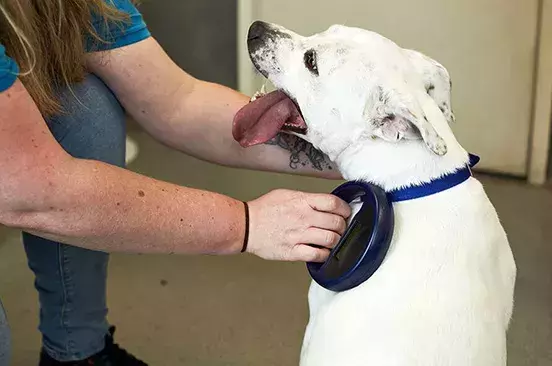
Members of the public and wardens can bring stray animals in at any time, day or night. When a warden brings a dog in we scan it to see if it has a microchip and fill in paperwork for the dog. If it is a member of the public bringing in an animal, we try to get as much information as possible about the animal i.e. where was it found and how long has it been straying, as well as scanning it for a microchip.

Upon arrival we look at the dog’s behaviour to determine which kennel it should be put into initially. If the dog is particularly nervous or aggressive we have isolation or quieter kennels that they can be housed in. We can get an idea of what the dog may be like when they first come into the reception and we can sometimes see how they react to other dogs and people there, which all helps in deciding where the dog should be kennelled and how it should be handled. We write notes on dog forms if necessary to help the kennel staff and anyone who will interact with the dog, i.e. if the dog is nervous we may suggest that it is left quietly to allow it to settle in.

At Battersea there is an open door policy, meaning we will accept any stray dog from a member of the public, regardless of its breed, behaviour or medical condition. Some animals arrive in poor condition, which is tough to see but on the positive side we know they are in the safest place now where they will be cared for and treated.

Once the paperwork is done we take the animal to be checked in by a veterinary nurse and then settle them into a kennel or cat pen. Depending on how busy the reception is, we can assist staff in other kennel areas with socialising dogs.

Accepting Gift Pets from the Public

Each day people come in who wish to give up their dog or cat. When the Home is at full capacity we manage a waiting list or ask them to try other rescue centres. Some people agree to do this and will take their animal back with them but inevitably some people become upset. In these situations we try to assure the person that we will take their animal when we have space for it and that if they could hold onto the animal for a bit longer we will let them know we can take in the animal.

When someone has arranged an appointment with us to bring their animal in, we take them into a separate room and complete the necessary paperwork. There are many reasons for the animals coming in, such as ill health in the family, change of accommodation or working hours, and behavioural problems in the animal. The owners are generally very emotional when they come in and this can sometimes be difficult to deal with.

The End of the Day

We are responsible for cashing up our till and sorting through the forms of the animals that have been claimed that day, filing them in the appropriate places. On the late shift we work until 9pm and have evening duties such as feeds around the Home and checking on the animals receiving medical care in our clinic.

The role of Lost and Found Assistant is interesting and varied. I have been in this role for six months and every day has been different. I am still learning new things about the Home and about how the animals here behave. There are many opportunities for training and development here; from customer service to dog and cat behaviour, as well as shadowing when possible. This enables me to understand other departments and to see how the Home operates as a whole.

Written by a current Lost & Found Assistant

Working Dog Co-ordinator

Jo Skidmore is Working Dog Co-ordinator for Battersea Dogs & Cats Home.

At Battersea, we do see a number of breed dogs coming into the Home and amongst these are many working breeds including Spaniels, Collies, German Shepherds and Labradors. All the dogs at Battersea go through a thorough assessment process which includes looking into their motivations for training. On assessment, we have increasingly found that many of these breeds and crosses of these breeds, are more suited to a working home where they will be provided with the mental and physical stimulation they need to lead happy and fulfilled lives. 

My job is to match these dogs with the right homes and Battersea dogs have gone on to work in a wide range of roles including taking part in agility, obedience, working trials and as search and rescue dogs. I’m involved in the assessment of the dogs to determine if certain dogs would benefit from a specific home or meet the criteria needed to be worked in a particular discipline.

As part of my role, I have established good working relationships with various organisations including the Army, RAF, HM Customs and Excise and the Police and Prison services. Dogs with various behaviour challenges that are often not suitable to be placed into pet homes are given the chance of a new start in life where they take on an extremely valuable role working alongside a handler.

As Working Dog Co-ordinator, on behalf of the Home, I actively support the work of assistance dog charities such as Hearing Dogs and Canine Partners by offering our dogs for rehoming if they are felt to be suitable candidates for this kind of role. We are proud that we are able to support other animal charities helping them with the valuable contribution they make to people’s lives.

I also accept rehoming applications for dogs to be used for gundog training
and help to rehome some of our Collies to sheepdog homes. Through liasing with farm contacts I arrange for Collies to be tested around sheep to establish their potential for working as sheepdogs.

Throughout the year I attend shows and events to promote working breeds, meet public and generally build up contacts to assist in rehoming our dogs. Occasionally, I am required to do filming for TV programmes explaining how dogs are assessed and rehomed to working outlets.

My role as Working Dog Co-ordinator is interesting, very rewarding and no two days are ever the same.

Receptionist at Battersea Old Windsor

The receptionists at Old Windsor have a very diverse role, with almost every part of the Home coming into contact with us at some point during the day. 

Morning Duties

Every morning starts with a print off of all the animals on site.  We then check this off by visiting each kennel and cat pod.  Any movement of animals – for example dogs arriving from the London Site - needs to be updated on the computer.  Whilst in kennels we also check that all the dogs have a photograph up of them and that they are all wearing correct collars.  If any of them aren’t, then we let the rehomers know.  The phones start ringing from 9am which can be customers wanting to enquire about handing their dog or cat in to us, enquiring about an animal they have seen on the website, upset customers who have lost their dog or cat, general rehoming or opening hours questions or something more weird and wonderful, such as asking if we have ferrets or chickens! 

There are always admin and paperwork tasks that need to be undertaken throughout the day, so there’s never a time when there is nothing to do.  

Later in the morning we accept the animals that are being handed in by their owners.  This can be a difficult time for owners and often the owner is very upset, so an empathetic nature is required. 

Afternoon duties:

We open at 1pm on a weekday (10.30 at weekends), so the afternoons are spent taking admission fees, answering lots of varied questions, undertaking sales for the lucky dogs and cats who are going off to their new homes – making sure all the paperwork is completed, engraving their identification discs, sorting out some food for them. 

We are also responsible for the small shop at Windsor, so we make sure that is well stocked, neatly merchandised and take money for any sales. 

Strays arrive from dog wardens and members of the public throughout the day, and we are the first point of contact for them so we organise the necessary paperwork and arrange for staff to assist.  We also process claims- animals that are being re-united with their owners – which usually involves lots of waggy tails and smiling, relieved customers!

The end of the day includes cashing up the till, filing the all important paperwork, faxing information to London and generally tidying up waiting rooms and re-stocking leaflets etc so that we are ready to start again tomorrow. 

Send to a friend

Registered charity No. 206394