Learn how to introduce your cat to your baby or children, prepare your family for safe interactions, and build positive relationships at home.
Welcoming a baby or a new cat into your home is a big moment for everyone – including your cat. With a bit of planning, patience and positive experiences, your child and cat have every chance of becoming firm friends. This guide will help you prepare and support them so everyone feels safe and confident.
How to know if a cat is right for your family
Cats can be wonderful companions for children, but every family is different. Before bringing a cat home, think about your household’s routine, noise levels and how much time you can give to a pet. Some cats enjoy busy homes, while others prefer a quieter life.
If you already have a cat and are expecting a baby, feel free to skip ahead to Introducing your cat to your baby.
Best age for a child to get a cat
There’s no perfect age, but very young children often struggle to understand gentle handling. Older children usually find it easier to follow rules and respect a cat’s boundaries. Whatever your child’s age, supervise initial interactions until they’re comfortable with each other.
Is it safe to have cats around newborns and children
Yes – with the right preparation. Cats and children can live happily together. Taking introductions slowly can make a big difference to how confident they both feel. Teaching children how to behave around cats reduces the risk of scratches or bites and helps your cat feel secure.
Choosing the right cat for your family
Consider temperament, age and background. Friendly, confident and relaxed cats usually cope best with young children, especially those who enjoy gentle handling and aren’t easily unsettled by noise or change. A cat with a history of living happily with children, or a kitten showing these qualities, is often a good match.
More timid or anxious cats may find family life overwhelming, so think carefully about the temperament that will help everyone feel comfortable and safe. Cats with medical needs and elderly cats may also find very young children stressful.
Before you start: help children understand cats
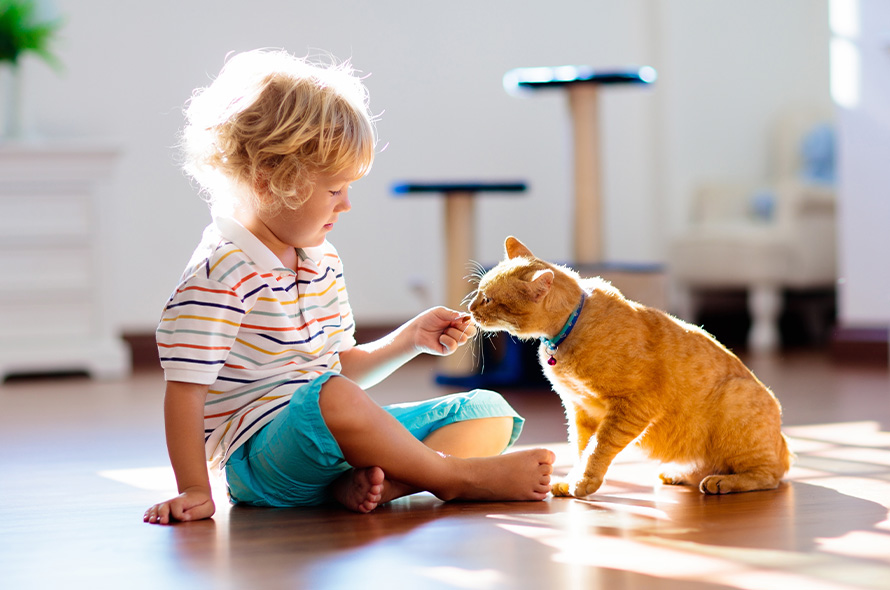
Children learn best when expectations are clear and consistent. Babies can’t understand rules yet, so your focus will be on supervision and managing the environment. Older children can learn how to behave around cats so interactions stay positive.
Teach children that cats:
- Need gentle voices and slow movements
- Don’t like being chased or picked up
- Need space to walk away when they’ve had enough
- Feel happier when people let the cat choose when to say hello.
You can also teach them what cat body language means.
Introducing your cat to your baby
A new baby brings new sounds, smells and routines. Preparing your cat early helps them feel more in control.
Start before the baby arrives
- Gradually introduce baby items like prams and toys. Leave treats nearby so your cat builds positive associations.
- Play recordings of baby noises at a very low volume and reward your cat with treats while the sounds play. Begin at barely audible, then gradually increase the volume over time. If your cat shows any signs of stress, stop for a few days and try again later at a much lower volume.
- If possible, bring home a blanket or item with the baby’s scent before the first meeting.
- If you don’t want your cat in the nursery, start closing the door ahead of the baby being born so they can adjust gradually.
When your baby comes home
- Let your cat choose whether to approach. Never force an interaction.
- Keep early meetings short and calm.
- Always supervise your cat and baby together.
- Give your cat quiet, child‑free spaces where they can retreat and relax.
- Make sure you still spend a little time interacting with your cat each day.
As your baby grows and becomes more mobile, keep reinforcing gentle behaviour and continue supervising closely.
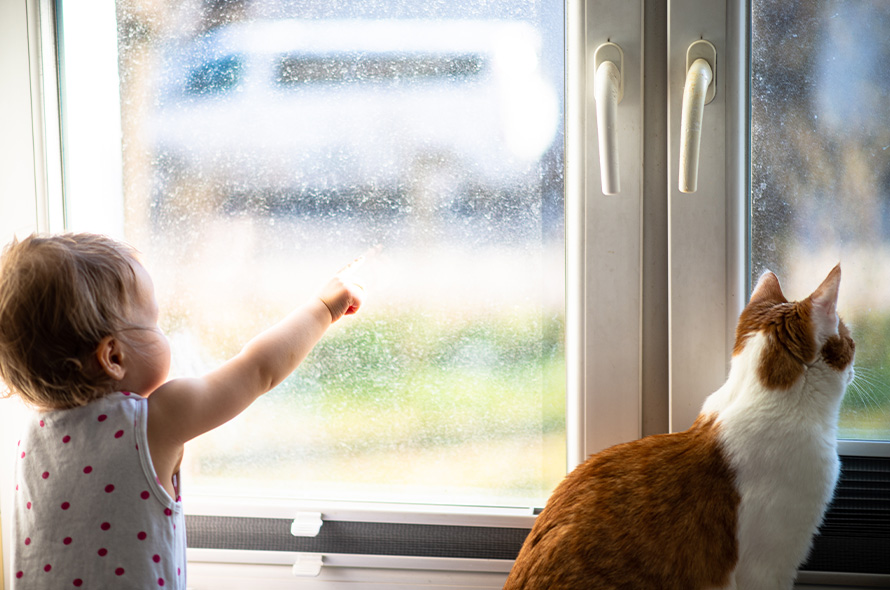
Introducing your kid/s to a new cat
Help your children and their new companion build a positive relationship from day one by following these steps.
Let your cat settle first
New cats need time to settle before meeting children. Set up a quiet room with everything they need. Once they’re confident exploring the house without children present, you can begin introductions.
Learn how to settle your cat into a new home
Keep first meetings calm
Ask children to sit quietly in a familiar room. Young children may need to be in a playpen or behind a baby gate. Let the cat enter and explore at their own pace. Encourage children to ignore the cat at first.
Let the cat approach
Teach children that cats choose when to say hello. They shouldn’t chase, grab or pick up the cat. Adults should follow the same rule.
Teach gentle interaction
Show children where cats usually like being stroked – cheeks, chin and between the ears. Avoid tummies and tails and only interact when the cat approaches first. Allow your cat to rub against the child's hand if they choose to. Help them spot signs the cat is enjoying the interaction, and when it’s time to stop.
How to stroke and interact with a cat
Try activities that don’t involve touching
Not all interactions need to involve stroking. Wand toys, puzzle feeders, simple training games, or even rolling a ping‑pong ball or toy mouse can help children bond with the cat while giving the cat plenty of space.
If children are very focused on petting, gently redirect them towards these positive, low‑pressure activities — or let them help with feeding or offering a treat. These kinds of interactions build trust without putting any pressure on the cat to be touched.
How to tell if your cat is struggling living with children
A cat that’s coping well will eat, sleep, groom and explore as usual. They’ll seem relaxed around the house, even when children are nearby.
Signs your cat may be struggling include:
- Hiding more than usual
- Avoiding certain rooms or times of day
- Only coming out when the child isn’t there
- Dilated pupils, flattened ears or tense posture
- Toileting outside the litter tray, diarrhoea
- Growling, hissing, swiping or biting
- Overgrooming, vomiting or changes in appetite.
If you notice these signs, speak to your vet or a behaviourist.
If your cat scratches your child
Sometimes, even with the best intentions, your cat may swipe or make contact to show they’ve had enough or feel overwhelmed.
- Clean the scratch.
- Don’t punish your cat – they’re reacting out of fear or stress, not spite.
- Look at what happened from the cat’s point of view. Were they cornered, startled or handled too roughly? Reinforce your handling advice to your child.
- Give your cat space, avoid attempting to calm them, and think about how you can support calmer, safer interactions next time.

Feline Behaviour team
Battersea’s Feline Behaviour Team are specialists in cat behaviour and welfare. With years of experience and professional training, they support cats through assessments, rehabilitation and enrichment. Their advice helps owners manage everyday challenges and strengthen bonds. They make sure Battersea is a trusted voice in feline behaviour and care. Read more about the team