Help your dog learn to lie down with step‑by‑step training and find solutions to common challenges.
Teaching your dog to lie down is a foundational skill that supports all their future training. Most dogs learn it within a few short sessions once they understand the movement, and you can start as soon as your puppy comes home. Older dogs can learn it too, though some may need a different approach if they find the position uncomfortable.
Step-by-step: How to teach your dog to lie down
1. Start with a sit
Begin with your dog sitting in front of you. This can make it easier to lure them into the down position.
2. Lure with treats
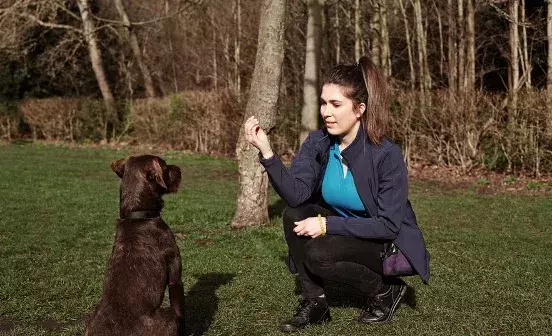
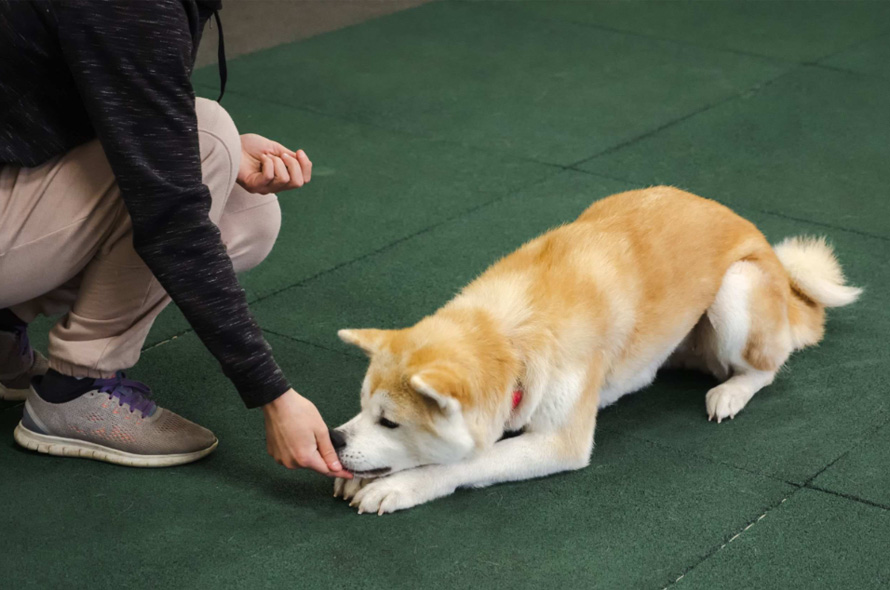
Hold a treat close to your dog’s nose, then slowly move it down towards the floor and between their front paws. As their head follows the treat, their body should lower into a lying position. The moment they lie down, reward them.
If your dog is struggling to move fully into a down position, reward them for lowering their body bit by bit until they confidently offer a full lie down.
3. Switch hands
Guide your dog into the down position with one hand, then reward them with your other hand.
After a few tries, remove the food from the hand you’re using to lure but keep the same movement, and reward from your other hand.
4. Introduce the verbal cue
Once your dog is following the lure reliably, add a simple cue like “down”. Say the cue once, then lure them into position and reward.
5. Phase out the hand signal
Gradually make the luring movement smaller until your dog responds to the verbal cue on its own.
6. Try on different surfaces
Try practising on different surfaces too, as some dogs find certain textures easier to lie down on.
7. Introduce distractions
Start adding small distractions once your dog can lie down reliably. Begin with something easy, like placing a toy nearby or having someone walk past at a distance. Ask for a lie down and reward when they follow the cue. Gradually increase the challenge as they grow more confident.
8. Phase out treats
As your dog becomes consistent, reward faster for better positions instead of every time. Instead of treats, you can also praise (say “yes”) and then give a toy.
Troubleshooting common challenges
If your dog can't sit comfortably
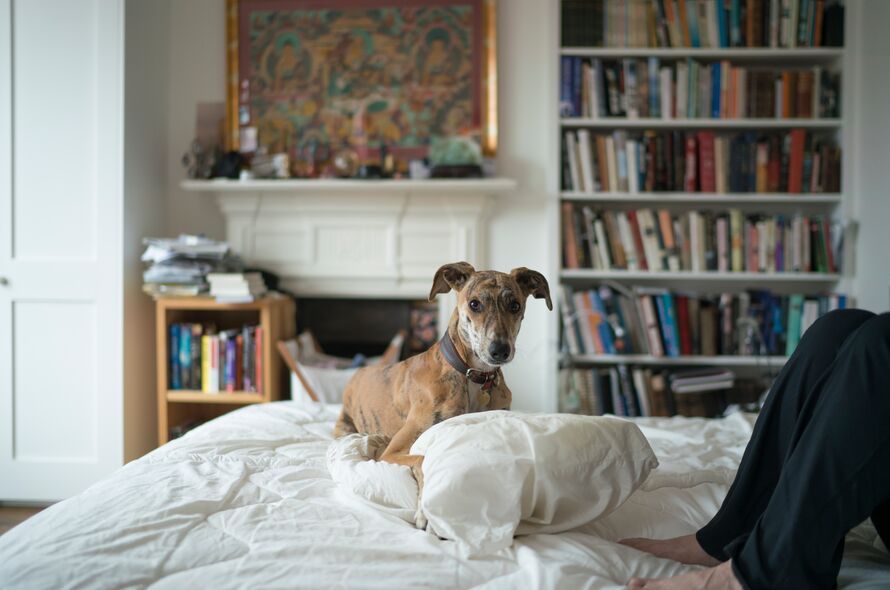
Some breeds, such as greyhounds, may find sitting awkward or uncomfortable. If sitting isn’t easy for your dog, you can start from a standing position.
From a stand, lure your dog’s nose down toward the floor and hold your hand still. Many dogs will naturally fold into a down from this position.
If they don’t, you can gently shift your hand slightly toward their chest to help them move diagonally back and down. Keep your hand movements slow and steady – if you move too quickly, most dogs will simply step forward or backward instead of lowering their body.
If your dog continues to look uncomfortable, speak to your vet.
If your dog won't lie down on certain surfaces
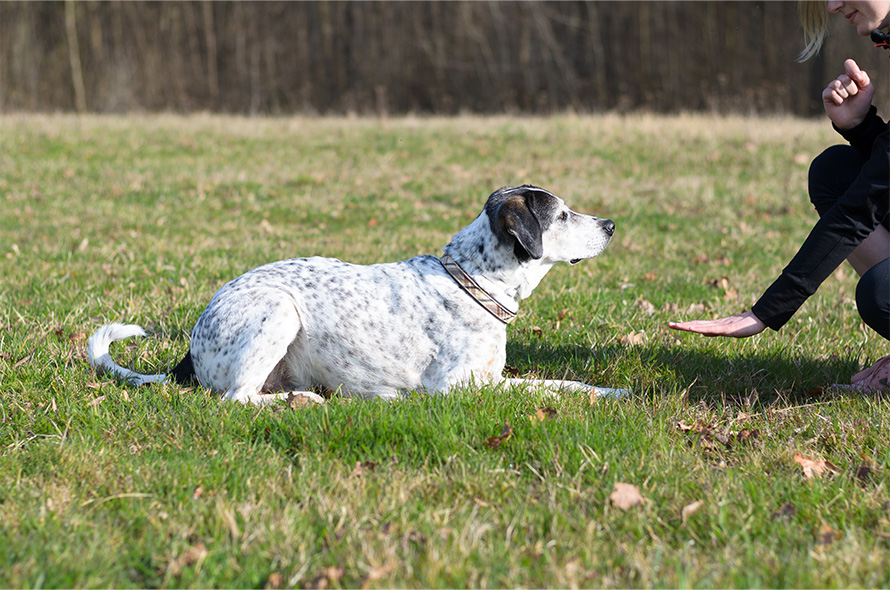
Many dogs hesitate to lie down on cold, slippery or uneven ground. Start on a soft, comfortable surface like carpet or grass. Once they’re confident, slowly introduce new textures so they learn to lie down anywhere.
If your dog struggles with hand positions
If your dog keeps popping up or gets confused, your hand movement may be too fast or too high. Slow the lure right down and keep it close to the floor. A steady, smooth movement helps them understand what you’re asking.
You could also try luring underneath a chair or your legs. This can help dogs who don’t like big hand movements, because the space naturally encourages them to lower their body without you needing to guide them as much.
If your dog doesn't follow your lure
If your dog doesn’t follow the lure, try watching or filming how they naturally go into a down. This helps you copy the path their body already takes, making it easier for them to understand what you’re asking.
If your older dog finds lying down uncomfortable
Dogs with arthritis or stiffness may find the movement difficult. Keep sessions gentle and avoid repeating the action too often. If lying down seems painful, speak to your vet and consider teaching an alternative behaviour.
Training slips happen. Go back a few steps.
Dogs of all ages, especially puppies and teenagers, can have moments where their training seems to disappear. If this happens, simply drop back a few steps and rebuild the behaviour. It is a completely normal part of learning. Keep practising these skills throughout your dog’s life to help them stay reliable and confident.
Using clicker training to capture a lie down
If you already use a clicker, capturing a lie down can be a simple way to teach the behaviour. Keep your clicker and treats nearby and wait for your dog to lie down naturally. The moment they do, click and reward. With repetition, they’ll offer the behaviour more often. Once they’re lying down confidently, add your cue by saying “down” just before they settle, then click and reward when they complete the movement.

Canine Behaviour team
Battersea’s Canine Animal Behaviour Team are experts in dog behaviour and welfare. The team is made up of trained professionals with decades of combined experience. They specialise in assessing, rehabilitating and supporting dogs using positive, evidence-based methods.
Their trusted guidance helps owners understand behavioural challenges and build stronger relationships. They make sure Battersea remains a leading voice in canine behaviour and welfare. Read more about the team