Learn how to teach your dog calmer greetings to help you manage jumping up at home and on walks.
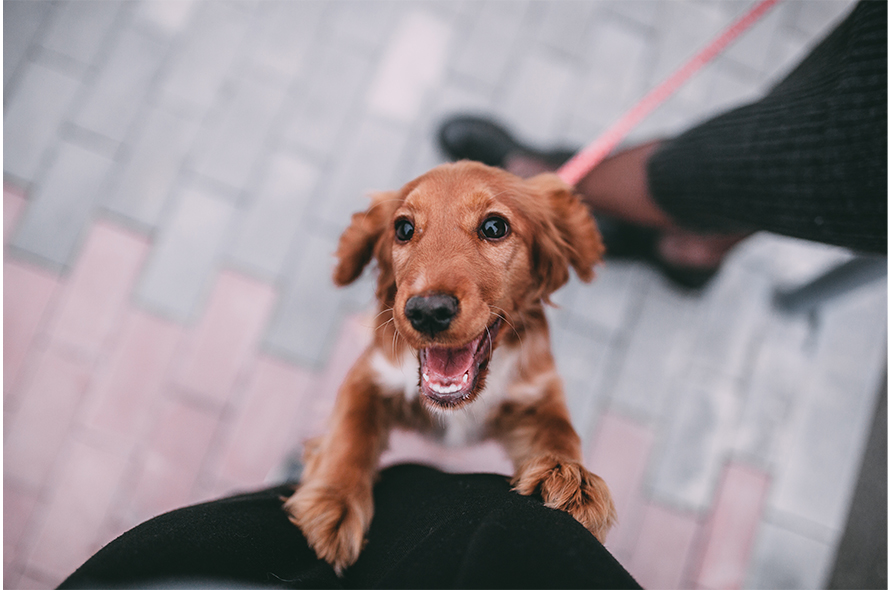
Jumping up is a common behaviour, especially in puppies and excitable dogs. But as dogs grow, it can become unsafe or overwhelming. The good news is that dogs of any age can learn calmer greetings with consistent practice.
Why dogs jump up
Dogs jump up for lots of reasons. They may be excited, seeking attention or feeling unsure. Some jump when they’re anxious, and others because it’s worked to get them attention before. Making a note of when it happens and what your dog looks like beforehand can help you spot patterns and understand what’s driving the behaviour.
Before you get started: tools that can help
These tools won’t replace training, but they make calmer greetings easier to learn.
- Baby gates to create space and give you time to settle before greeting your dog.
- Leads to guide your dog and prevent jumping before excitement builds.
- Long lasting chews or enrichment activities to help your dog stay occupied while visitors arrive.
How to stop your dog from jumping up
Stay calm, keep sessions short and reward the behaviour you want.
Set up practice sessions that resemble the situations where your dog usually jumps but make them easier and less exciting at first. Add real life elements gradually – like the doorbell, visitors or greetings at the door.
Ignore the behaviour
Ignoring jumping can help when your dog is small, safe to ignore, and jumping up at you for attention. It isn’t suitable for large or anxious dogs, or when with strangers, children or anyone unsteady on their feet.
- Any attention – even saying “no” – can reinforce jumping.
- Turn away and stay still until all four paws are on the floor.
- Stay consistent. If you respond differently each time, your dog won’t know what works and may continue to experiment with different behaviours to get attention.
- Expect a brief increase in jumping before it improves. This behaviour has worked for your dog until now, so they may try harder before trying something new.
Teach an automatic sit
A reliable sit gives your dog an alternative action to jumping. It suits most dogs, except those who find sitting uncomfortable. It suits most dogs, except those who find sitting uncomfortable.
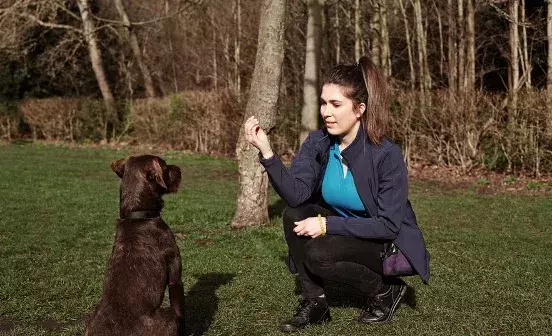
- Ask for a sit every time your dog approaches or in situations they normally jump up.
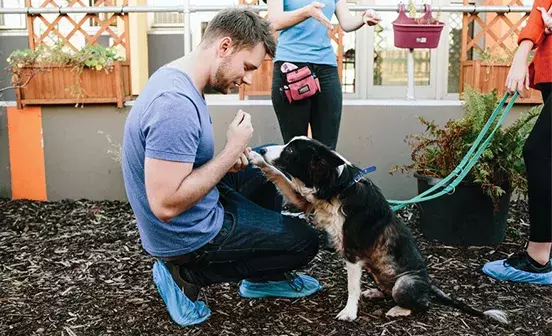
- Calmly reward or praise as soon as they sit, even if it’s only for a moment
- If they don’t sit, or they break the sit before you’ve rewarded them, don’t give them attention. Instead, walk away from what you were doing.
- Practise this consistently before meals, before putting the lead on and during calm moments throughout the day.
- Set up mock scenarios to practice when your dog jumps up, like greeting people or coming home.
Use a lead when someone is coming over
Greeting people is a major trigger for jumping, so planning ahead makes a huge difference.
How to reduce jumping up on visitor
Use a lead if your dog is too excited to listen. It helps you guide them and prevent jumping. Avoid this for very anxious dogs who need space to move away.
- Clip on a houseline (a thin lead without a loop) before visitors arrive to avoid associating the lead with visitors. This gives you gentle control without creating extra excitement.
- Ask your dog to sit before greeting visitors.
- If they jump, calmly guide them away and try again.
- Only allow greetings when your dog is calm.
- Let visitors know you're working on calm greetings so they can help.
How to reduce jumping when meeting people on walks
- If your dog is usually off lead, let them run around with their lead still on so you can pick it up easily when people approach.
- Let your dog greet only when calm; ask for a sit and guide them away if they go to jump.
- Tell people you’re working on calm greetings and ask them to only say hi when your dog is sitting.
Teach your dog to greet people
Practise calm entrances and exits
These moments often trigger jumping, so they’re ideal for training.
If you use a baby gate
- Ask for a sit before opening it.
- Reward the sit, then enter calmly.
- Interact only when your dog stays settled.
If you don’t use a baby gate
- Open the door slowly and keep your body language relaxed.
- Reward your dog for sitting or keeping four paws down before you enter.
- Throw the treat slightly away to create space while you walk in.
- If they start to jump, pause attention or use a lead to guide them.
Teach your dog to pass you by
Useful for dogs who rush straight at you or can’t manage a sit in exciting moments.
- As your dog runs towards you, hold a treat at your side and guide them past.
- Drop the treat behind you so they pause and settle.
- Once calmer, you can ask for a sit or offer a calm greeting.
- Practise in hallways or garden paths.
Reinforcement placement
Where you reward matters. If rewards come from your hands near your chest or face, dogs may jump to reach them.
- Drop food to the floor to encourage four paws down.
- Use lower value treats if your dog gets overexcited around food
Teach a “bed” or “go to place” cue
A send away cue can help your dog settle when excited. This is usually built up to gradually.
- Ask your dog to go to their bed or mat.
- Reward calm behaviour there.
- Use this when visitors arrive or when your dog struggles to stay settled.
Tips to keep training on track
- Give calm attention only when all four paws are on the floor.
- Keep greetings consistent – ask everyone to respond the same way.
- Build up gradually from easy situations to more exciting ones.
- Phase out food rewards slowly to avoid over excitement.
- Notice and reward the behaviours you do want – calm behaviour is easy to miss.
Every bit of practice helps. With patience and consistency, calmer, happier greetings will become part of everyday life.
Why behaviour may get worse before it improves
When jumping no longer works, your dog may try harder before giving up the behaviour. This is a normal part of learning. Stay patient and keep rewarding calm choices.

Canine Behaviour team
Battersea’s Canine Animal Behaviour Team are experts in dog behaviour and welfare. The team is made up of trained professionals with decades of combined experience. They specialise in assessing, rehabilitating and supporting dogs using positive, evidence-based methods.
Their trusted guidance helps owners understand behavioural challenges and build stronger relationships. They make sure Battersea remains a leading voice in canine behaviour and welfare. Read more about the team