Discover how to introduce a collar, lead or harness in a calm, positive way. Step‑by‑step tips to help your puppy or dog feel relaxed and ready for walks.
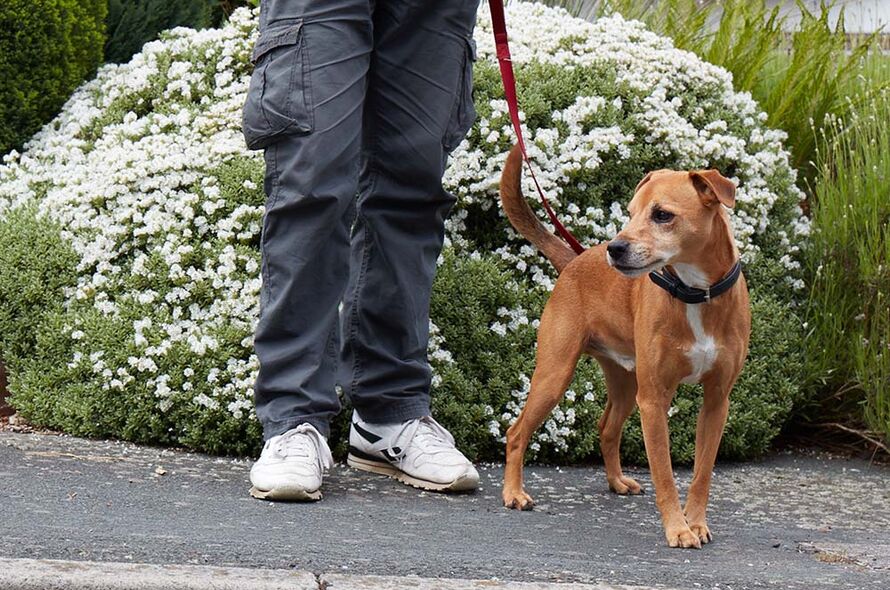
Helping your dog feel confident in their collar, lead or harness makes every day walks safer and more enjoyable. You can start this training as soon as your puppy comes home, or when an older dog joins your family.
Go at your dog’s pace – some dogs accept new equipment quickly, while others need more time or a personalised plan. If you notice signs of pain or fear, pause and speak to your vet or a behaviourist.
How to introduce a collar
Choosing the right collar for your dog
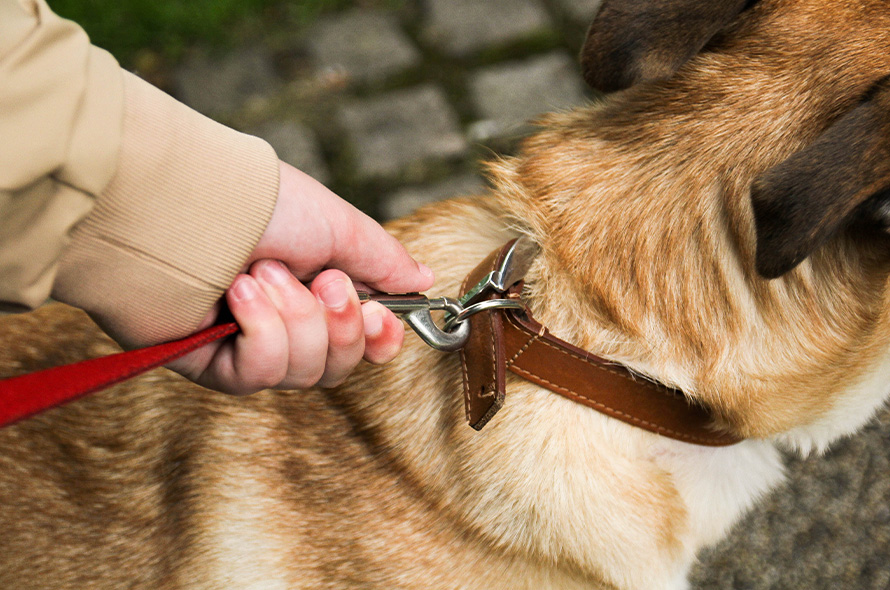
A flat collar is a simple, safe choice for most dogs. It should fit snugly – two fingers between the collar and your dog’s neck.
Legal requirement: All dogs must wear a collar with an ID tag in public with their owner's name and address.
Getting your dog used to wearing a collar indoors
- Start by offering the collar in your hand or placing it on the floor, and reward any calm sniffing or interest.
- Ask your dog for a simple behaviour, such as a sit, and slowly bring the collar towards their neck.
- Reward them for staying still. If they move away, take a step back and reward them for staying settled while you pick the collar up.
- Once they’re comfortable with the collar near them, begin slipping it over their head and fastening it, rewarding as you go.
- Keep sessions short and help them relax by playing with toys or doing some training while the collar is on.
- Build up the amount of time they wear the collar gradually so it becomes part of normal life.
What to do if your dog scratches, paws or resists the collar
- It’s common for puppies to scratch or mouth at a new collar as it’s a new sensation for them.
- Distract them with treats, toys or gentle play.
- Remove the collar only when your dog is calm.
- If the scratching continues, check the fit of the collar. Puppies and dogs who need to gain weight can outgrow their collars very quickly.
- If your dog freezes, panics or growls, stop and seek support.
How to introduce a harness
Picking a well‑fitting harness
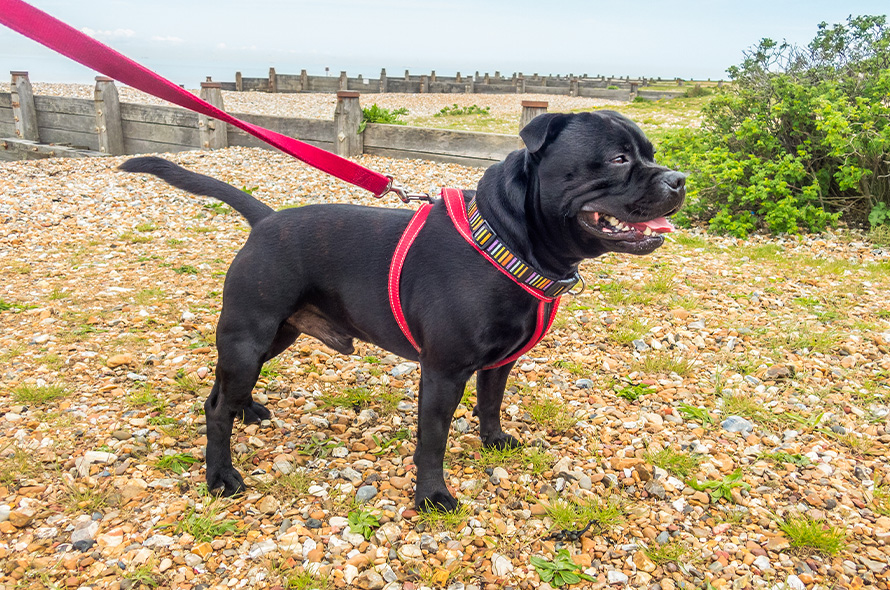
- A good harness should avoid pressure on your dog’s neck and allow free shoulder movement.
- Look for a Y‑shaped front for comfort.
- Try different styles (over‑head, step‑in or clip‑around) to see what your dog prefers.
- Switching harness types can help if your dog has negative associations with a previous harness or if they have already learned to pull strongly in certain equipment.
Introducing the harness gradually
- Reward your dog for sniffing or approaching the harness.
- Lure their head through the neck hole, reward, then remove.
- Build up to moving the straps around their body before clipping anything.
- Reward after each clip sound so it becomes familiar.
- Keep sessions short and upbeat.
Helping a dog who is nervous or scared of the harness
- Place the harness on the floor with treats around it.
- Reward small steps – looking, stepping closer, touching.
- Avoid leaning over your dog. Stay beside them and move slowly.
- Choose a clip‑around harness if lifting legs is uncomfortable.
- If you suspect pain (e.g. sensitive ears, stiff joints), speak to your vet.
How to help your dog get used to wearing a lead
Building positive associations with the lead
- Clip the lead on indoors and let it trail while your dog enjoys treats or mealtimes.
- Sprinkle treats so your dog moves naturally with the lead attached.
Practising lead attachment without excitement
- Hold the lead loosely and follow your dog as they explore.
- Practise short sessions moving between rooms.
Troubleshooting overexcitement when the lead comes out
- Pick up the lead at random times without going for a walk.
- Reward calm behaviour before clipping it on.
- Offer a toy if your dog grabs or chews the lead.
Building positive associations with handling and equipment
Reward‑based handling exercises
- Touch your dog gently on their neck, chest and legs, then reward.
- Keep sessions short and positive.
- Build up to brief equipment checks.
Helping your dog stay relaxed during equipment checks
- Pair every touch with a treat.
- Stop before your dog becomes uncomfortable.
Troubleshooting common problems with collars, leads and harnesses
My dog freezes or refuses to move
If your dog freezes or seems unsure, take the training back a step and reward even the smallest attempts to move forward. This gentle reset often helps rebuild their confidence. It’s also worth checking whether the collar, lead or harness is uncomfortable or poorly fitted, as this can make dogs reluctant to walk.
My dog backs away when I bring out the harness
Some dogs step back simply because the harness feels unfamiliar. Try placing it on the floor and rewarding your dog for approaching it in their own time. Allowing them to explore it without pressure can make a big difference. If they still seem worried, switching to a different harness style may help them feel more at ease.
My dog chews or grabs the lead
Some dogs grab the lead because they are excited, frustrated or simply need something to hold. Offering a toy before you clip the lead on can help, if you do it early enough that you’re not accidentally rewarding the grabbing itself. It can also help to look at what is triggering the behaviour. For some dogs it is a burst of excitement at the start of the walk, while others use the lead to release frustration.
Practising calm lead handling indoors, where there are fewer distractions, can make it easier for your dog to learn how to settle and walk without mouthing the lead. If the behaviour goes beyond a quick grab, or your dog starts chewing through the lead or redirecting onto you, it is best to seek advice from a behaviourist.
My dog gets anxious when equipment goes on
If your dog becomes tense when their collar, lead or harness goes on, slow the process down and reward each small step. It also helps to work out what is causing the worry. Some dogs are unsure about the equipment itself. Others feel anxious about what comes next, such as going outside or getting in the car.
Watch your dog’s body language and notice when they start to look uncomfortable. This can help you understand what they are reacting to. Once you know the trigger, you can focus your training on that part of the routine and help your dog feel more relaxed.
When to seek extra support
If your dog shows ongoing fear, frustration or discomfort, or if progress stalls, contact a behaviourist for tailored help.
If your dog is avoiding the equipment altogether, this can also be a sign of pain, so speak to your vet to rule out any medical issues.

Canine Behaviour team
Battersea’s Canine Animal Behaviour Team are experts in dog behaviour and welfare. The team is made up of trained professionals with decades of combined experience. They specialise in assessing, rehabilitating and supporting dogs using positive, evidence-based methods.
Their trusted guidance helps owners understand behavioural challenges and build stronger relationships. They make sure Battersea remains a leading voice in canine behaviour and welfare. Read more about the team