Learn what to expect from owning a Dachshund, including temperament, barking, health issues and costs.
Dachshund Breed Facts
- Life expectancy: 10 to 16 years
- Size: Miniature (4.5kg to 5kg) or Standard (9kg to 12kg)
- Daily care needs: High – consistent training and regular grooming for long-coats
- Exercise needs: Moderate – gentle, low-impact exercise and scent games rather than high-energy play
- Costs: Ongoing vet care for breed-related health conditions
Are you the right match for a Dachshund?
Dachshunds are full of personality, are famously vocal and bond intensely with their owners.
However, their distinct long bodies come at a huge cost to their spine. Dachshunds are prone to a serious back condition. If you want a quieter dog, or can't commit to managing their back health, another breed may suit you better.
Miniature and Standard Dachshunds differ mainly in size rather than temperament. The right choice often comes down to which size suits your home.
Temperament and behaviour
Dachshunds are independent and can be strong-willed. Training works best when it's engaging and rewarding.
Recall can be tricky, as Dachshunds are led by their nose and can wander off quickly. Many owners will need to commit to lifelong recall training.
Originally bred for hunting, Dachshunds are intelligent and loyal, often very affectionate toward their owners. They like to stay busy and can start barking a lot if they get bored.
Barking and being left alone
Dachshunds can be quite vocal, particularly if they don’t get enough exercise and mental stimulation.
They bond closely with their owners and can struggle when left alone. If barking and time alone aren't managed through early socialisation and training, each issue can make the other worse.
Not sure a Dachshund matches your lifestyle? Try Woodgreen's Pet Explorer Tool to find out what breed is right for you.
Are Dachshunds good with people and other dogs?
Dachshunds can find busy environments challenging and may bark or become over-excited around new people and unfamiliar dogs.
Early, gentle socialisation helps build their confidence. This matters even more for a smaller dog, who may feel more vulnerable around bigger dogs or crowds.
Dachshund health issues
Spinal disease (IVDD)
Because of their long backs, Dachshunds are at high risk of intervertebral disc disease (IVDD). This is where a slipped disc puts pressure on the spinal cord. It can cause pain, paralysis, or problems with walking and going to the toilet.
Around one in four Dachshunds will experience a significant IVDD episode during their lifetime. This can be a stressful experience for both dogs and their owners, and it requires immediate veterinary attention.
Treatment can mean intensive nursing, physiotherapy or emergency surgery. Standard insurance cover isn't always enough for spinal surgery costs, so it's worth checking policy limits carefully.
While IVDD can't always be prevented, using a harness, ramps to avoid stairs and jumping and maintaining a healthy weight can help reduce the risk.
Heart disease
Some Dachshunds can develop mitral valve disease, where a valve in the heart doesn't close properly, causing blood to flow the wrong way. This is managed with regular medication and vet check-ups, and can be life-limiting over time.
Eye disease
Dachshunds are at higher risk of inherited eye conditions, some of which can cause blindness. Responsible breeders often test parents to reduce the chance of passing it on, so it's worth asking about this when buying a puppy. It isn't treatable and diagnosis can be costly.
Dachshunds can face a range of serious health problems, which can be expensive and upsetting. You'll need to understand the issues they may be at risk of.
Grooming
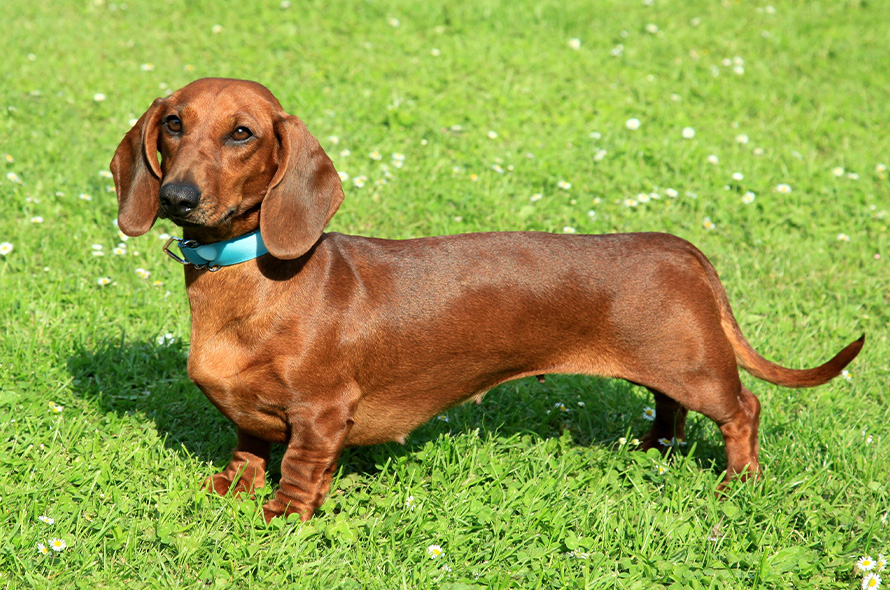
Dachshund coats vary from smooth to long-haired and wire-haired. Their coat type will affect how much grooming they need. Smooth coats need little, while long and wire coats need regular brushing.
Being so close to the ground also means they can get muddier and dirtier than taller breeds. Expect more frequent cleaning after walks.
Costs to consider
Owning a Dachshund is a long-term financial commitment, with health conditions like IVDD potentially leading to high vet bills. RSPCA estimates costs of £62 - £221 a month. Pet insurance doesn't always cover everything, particularly for spinal surgery, so check policy limits carefully.
Reducing health risks when choosing a Dachshund
Choose a breeder who health-tests both parent dogs, including screening for eye disease, and can talk openly about IVDD risk in their lines.
Adopt a Dachshund
People can underestimate the complexities of the breed, which is why Dachshunds are often given up. Adopting gives them a second chance, with our team by your side.
Find the right breed for your lifestyle
Choosing a dog is a big decision. Woodgreen's Pet Explorer helps you discover which breeds suit your home and routine, in just a few minutes.

Canine Behaviour team
Battersea’s Canine Animal Behaviour Team are experts in dog behaviour and welfare. The team is made up of trained professionals with decades of combined experience. They specialise in assessing, rehabilitating and supporting dogs using positive, evidence-based methods.
Their trusted guidance helps owners understand behavioural challenges and build stronger relationships. They make sure Battersea remains a leading voice in canine behaviour and welfare. Read more about the team

Veterinary Clinic Team
Battersea’s Veterinary Team are skilled vets and nurses who care for thousands of dogs and cats each year. They provide check‑ups, vaccinations and routine and complex surgeries across our site clinics. Their expertise helps every dog and cat in our care get the best possible treatment. Read more about the team