What to get before bringing your puppy home?
Here’s a handy starter list - no fluff, just the essentials.
Food and mealtime
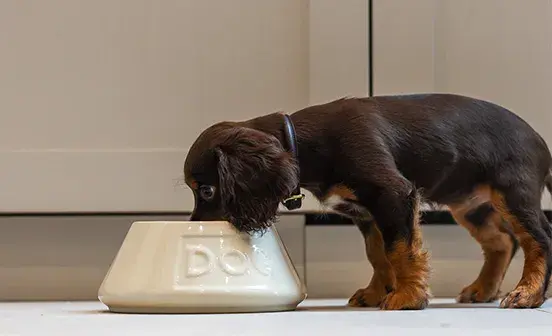
- Non-slip food and water bowls (you can buy sloped ones to help keep those long spaniel ears dry).
- Puppy food (ask your breeder what they’re currently eating for a smooth transition).
- Tasty training treats.
Sleep and comfort
- Crate (if you’re crate training) and/or puppy pen.
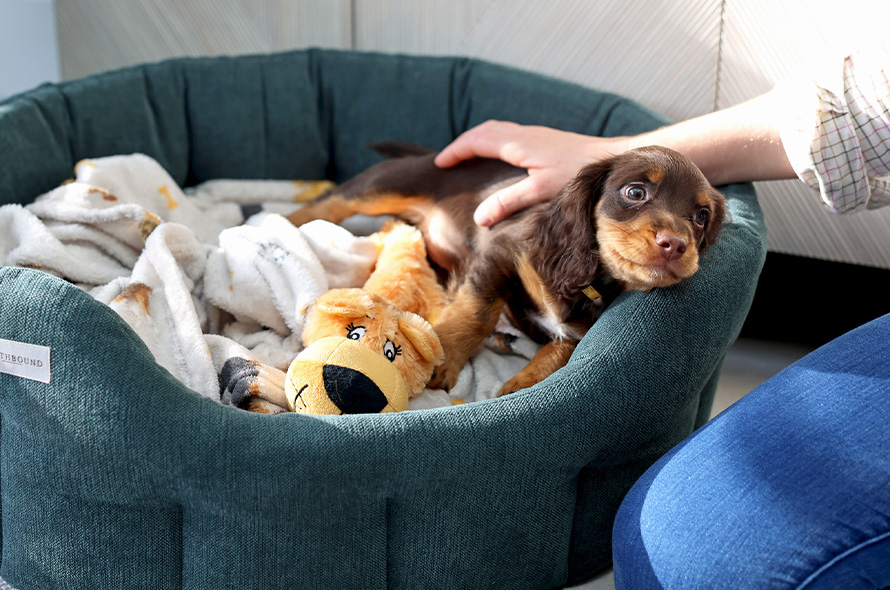
- Bed and blankets
- A soft toy or blanket that smells like home can be comforting. (Ask your breeder if they can provide this!)
Walking gear
- A Y-front, adjustable, padded harness and flat collar.
- A short, light clip lead (non-extendable) lead.
- ID tag with your surname and address (UK law).
Toilet and cleaning
- Puppy pads for the early days.
- Poo bags.
- Enzymatic cleaner for those inevitable accidents (regular cleaners aren’t enough).
- Play and teething
- Puppy-safe chew toys (rotate them to keep things interesting).
- Mix up play to prevent unwanted nibbling on furniture.
Grooming and health
- Soft puppy brush.
- Puppy shampoo.
- Nail clippers (or ask your vet/groomer for guidance).
Travel
- Soft carry crate for bringing your puppy home
Puppy proofing your home
Your puppy is like a curious toddler - if they can reach it, chew it, or knock it over, they probably will. Puppy-proofing takes a bit of work, but it can save a lot of stress (and vet bills) later
Make sure in the house you:
- Tidy up wires and anything small enough to swallow.
- Lock away cleaning products, human food, meds - anything toxic.
Toxic Food for Dogs:
- Watch out for foods that are poisonous to dogs like chocolate, grapes/raisins, onions, garlic, chives, macadamia nuts, avocado, xylitol (found in sugar-free items like gum).
- Avoid cooked bones - they can easily splinter and cause harm to your puppy.
Set up your space for your puppy:
- Baby gates are your friend - great for stairs or off-limit rooms.
- Close low windows and block balconies.
- Slippery floors? Rugs or mats can help prevent any unwanted injuries.
- Keep stairs off-limits for now - their growing joints need protection.
In the garden:
- Double-check fences and gates
- Watch out for water features
- Remove toxic plants: lilies, yew, foxgloves, daffodil bulbs, azaleas, bergenia, wisteria… Check anything you’re not sure about.
Bringing your puppy home
Excited (and maybe a little nervous)? Bringing your puppy home is a big moment, and that first journey can set the tone for how they feel about car trips in the future. If you’re not bringing your puppy home with your own car, try a pet-friendly cab or a friend/family ride. Public transport can be overwhelming for tiny puppies.
Tips to keep your car journey as smooth as possible:
What to bring:
- Bring a towel, some puppy pads, and wipes - just in case they get travel sick.
- Ask your breeder if you can take something that smells like home, like a blanket or toy from mum and the litter. Familiar smells are comforting for a worried puppy.
- Travel safely in a soft crate or secured carrier.
Before you set off:
- Skip feeding right before the journey - puppies get queasy easily. But bring some water and a drinking bowl in case your puppy gets thirsty.
Whilst on the Road:
- If you can, have someone sit next to them so they don’t feel alone. Let them sniff around and settle in before you start travelling.
- Keep the car quiet and cool - save loud music for when your puppy isn’t there.
- Never leave your puppy alone in a parked car - even a few minutes can be dangerous.
- If your journey home is long make sure you’re stopping at least every 1.5 hours for a toilet break, stretch and a drink.
- For toilet breaks, avoid anywhere with wildlife, standing water, or where lots of other dogs have been (because of bugs and diseases their little immune systems aren’t ready for yet). Avoid busy spots for other dogs like service station green areas.
Puppy’s first night in their new home
Those first nights with a puppy? Excitement, nerves, and probably not much sleep. This is all to be expected.
Settling them down to sleep:
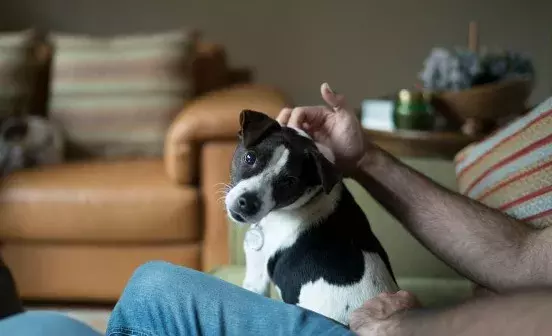
Don’t worry if your puppy cries a bit. They’ve just left everything they know behind - it’s not them trying to be naughty or difficult, they’re just a bit scared. Give them comfort when they need it. Try to avoid picking them up too much. Provide some calm reassurance with verbal praise and light strokes, then try and settle them down with you nearby.
Set them up in their crate or bed close to where you want them to sleep - this could be in your room, close to where you’re sleeping, or in a different room (you can always set up a baby monitor to keep an ear out).
Toilet breaks:
Expect and plan to be up every 3-4 hours. The important thing is to keep it boring - low lights, no chatting, no midnight play sessions (unless you want to create a bad habit). And remember to cut yourself some slack - both of you are figuring this out, and the first few nights can be a bit tricky.

Canine Behaviour team
Battersea’s Canine Animal Behaviour Team are experts in dog behaviour and welfare. The team is made up of trained professionals with decades of combined experience. They specialise in assessing, rehabilitating and supporting dogs using positive, evidence-based methods.
Their trusted guidance helps owners understand behavioural challenges and build stronger relationships. They make sure Battersea remains a leading voice in canine behaviour and welfare. Read more about the team